Koh Phangan for the active wellness traveller: combining yoga, kitesurfing and wing foiling on the island
31.03.2026
Read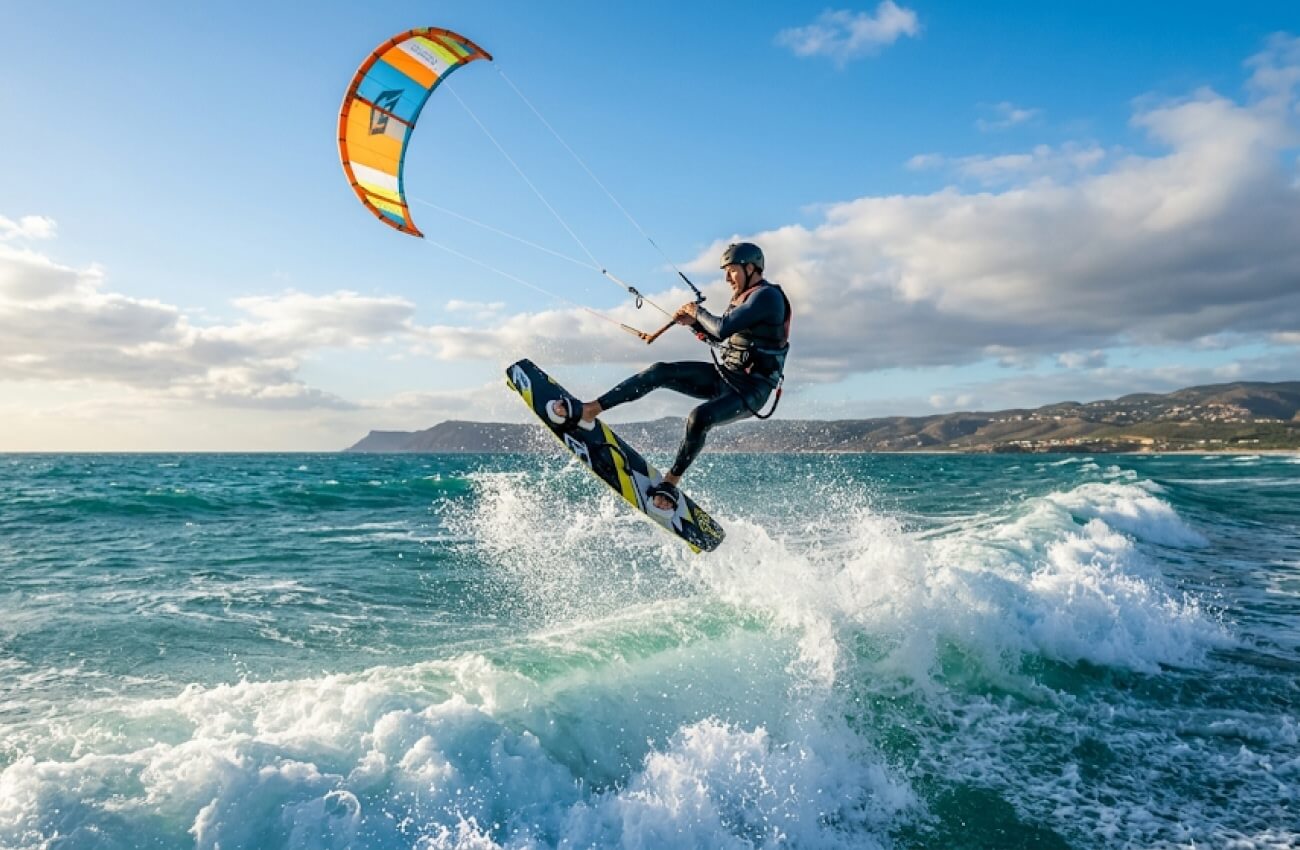
“Will I actually get up and ride, or just spend the whole trip falling in the water?”
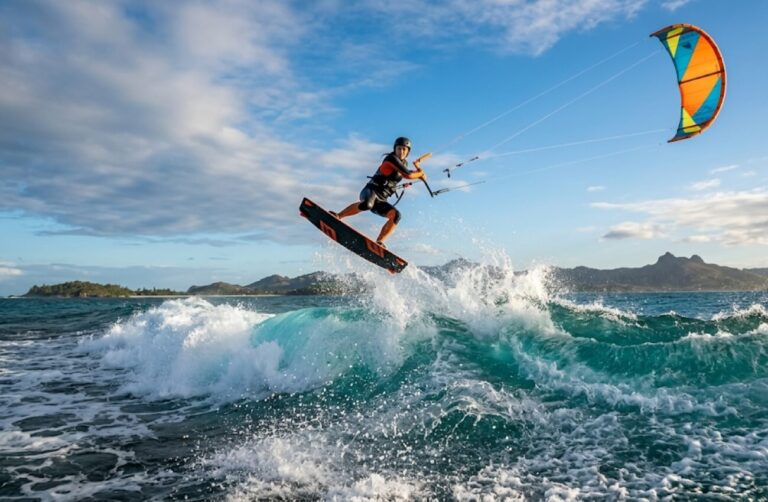
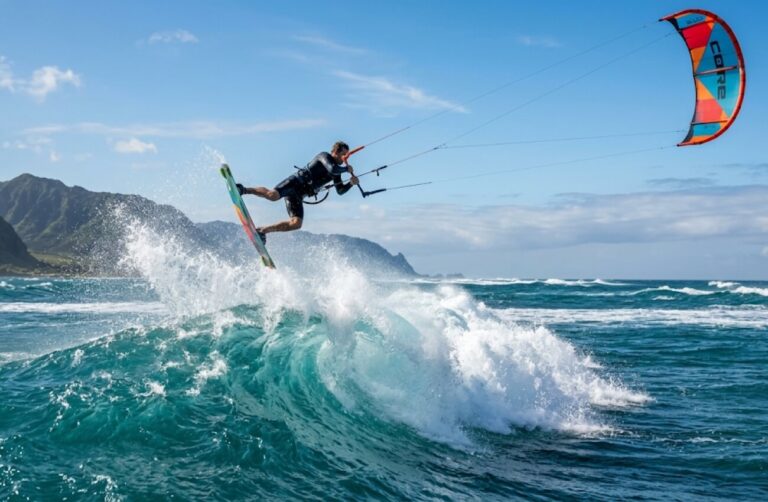
That question arrives almost daily. And it deserves a straight answer rather than the usual promotional reassurance. So here it is: most adults who come through a structured beginner course on Koh Phangan get their first real board ride within 3 days. Not everyone. Not on the first afternoon. But within a 6-hour beginner course split across 3 days, the majority of students with no prior experience reach the point where they’re riding — briefly, imperfectly, and with a lot of adrenaline.
Why Koh Phangan specifically? Shallow flat water, steady northeast wind rather than gusty unpredictable conditions, and warm temperatures that mean your body isn’t fighting fatigue from cold. Those three factors compress the learning curve in ways that matter, and we’ll come back to them. First, the timelines.
The Discovery session is 2 hours and costs 3,500 THB. The entire focus is kite control — understanding how the kite moves through the wind window, how to generate and kill power, and what the safety systems do. By the end of those 2 hours, most students are flying the kite with reasonable confidence from the beach and have their first experience of body dragging in shallow water.
The Beginner course runs 6 hours across 3 days — 2 hours per day — at 11,000 THB. This is where real progress happens. Day one covers kite relaunching, body dragging upwind, and board handling in the water. By day two, most students are getting their feet onto the board and attempting their first power strokes. Day three is where it comes together: the first actual rides, usually short and wobbly, but unmistakably real. IKO certification is included.
The Independent course is 10 hours over 5 days at 18,000 THB and takes you to a different level entirely. By the end you’re riding upwind consistently and capable of kiting independently at any spot, not just a supervised learning zone. The IKO certification at this level is internationally recognised — you can hire gear and ride anywhere in the world after completing it.
One honest note: progress varies. Students with a background in board sports, good spatial awareness, or prior water confidence tend to move faster. Some people need an extra session between the Beginner and Independent stages. That’s normal and not a reason to feel discouraged — it usually just means one more day on the water.
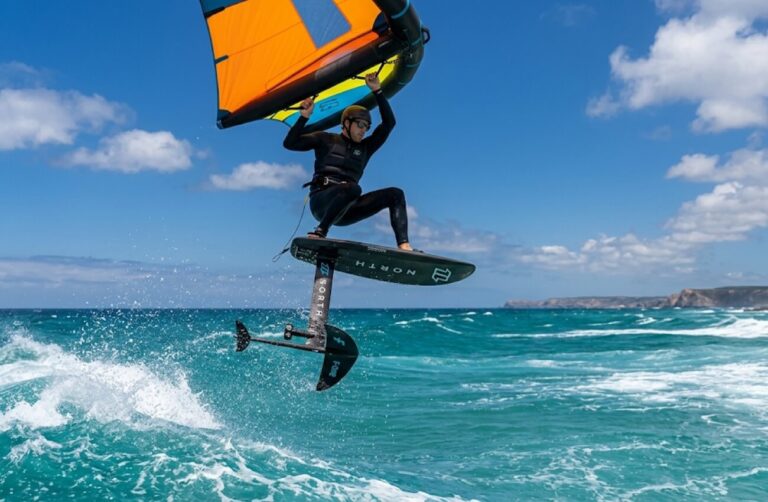
For those considering wing foil on Koh Phangan, the learning curve looks like this: the challenge shifts from kite management to board balance. You’re holding the wing in both hands rather than controlling a kite on lines, which removes some of the spatial complexity — but the foil board underneath demands more from your legs and core than a flat kite board does.
The single lesson (2 hours, 4,000 THB) covers wing handling, board stability, and the basics of hydrofoil dynamics. The first hour happens without the foil — just wing and board — which is deliberate. Getting comfortable with the inflatable wing before the board starts lifting off the water makes the overall process significantly cleaner.
The Beginner course (6 hours / 3 days, 11,900 THB, IWO certification included) builds from standing on the board with the wing to generating forward movement and, by day three for most students, achieving the first brief foil-off moments where the board lifts clear of the water. Those moments are short-lived at first. But they’re unmistakable, and they’re what keeps people coming back.
The Advanced course (10 hours / 5 days, 16,900 THB) takes you to confident, independent foiling in both directions. Students who reach the end of this programme leave as capable riders who can handle gear rental and self-directed sessions without supervision.
Sergei and Abdulla hold IKO Level 3 certification — the highest instructor grade in the IKO system. Roman holds IKO Level 2. Abdo is both IKO Level 3 and IWO certified for wing foiling. The team has more than many years of teaching experience per instructor, which in practical terms means they’ve seen the full range of student starting points and know how to adjust the approach accordingly.
The multilingual dimension is genuinely useful. The team covers English, Russian, Arabic, German and Ukrainian. When a student is struggling with a technical concept, explaining it in their first language rather than working through broken English cuts straight through the confusion.
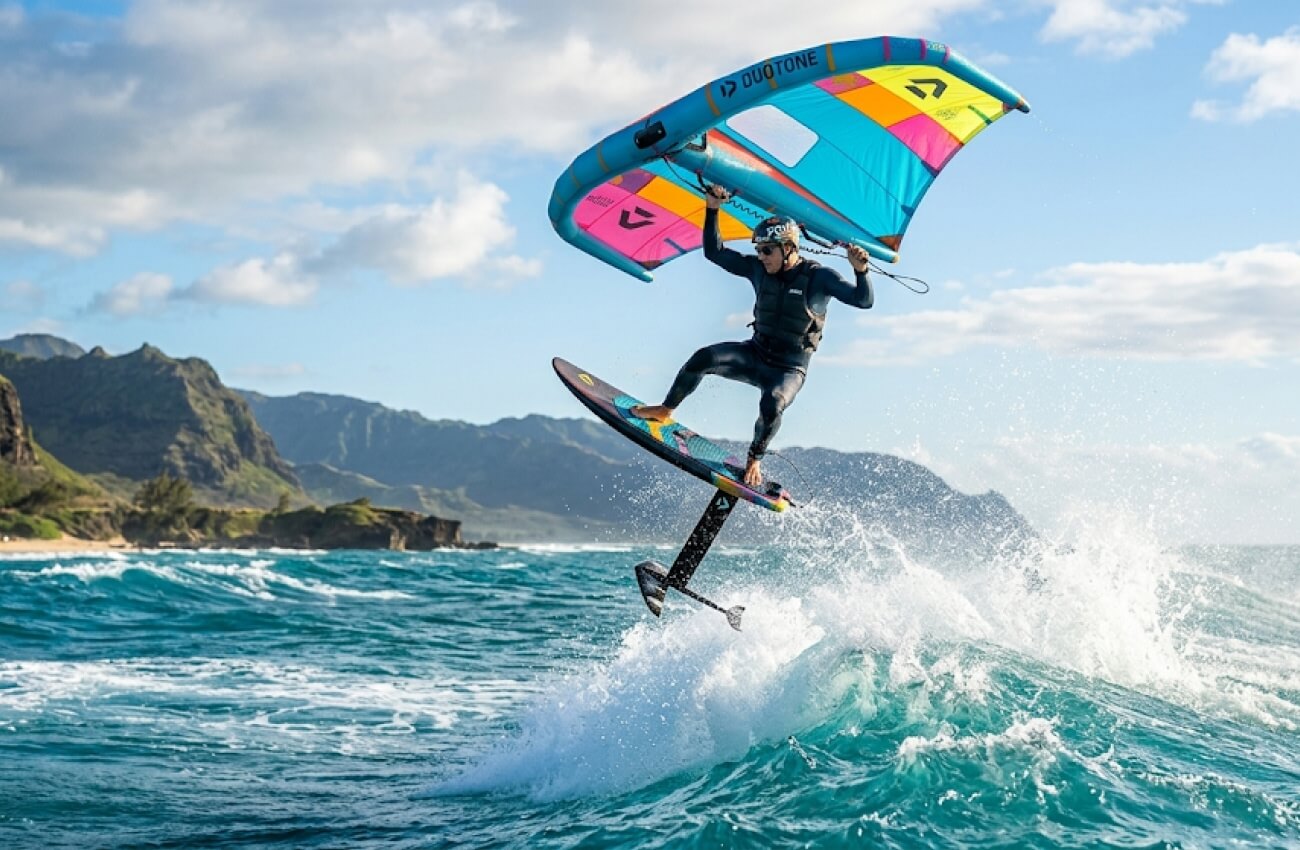
The shallow lagoon where you run your kitesurf on Koh Phangan sessions means you can put your feet down at almost any point during the early stages. That sounds minor until you’re in the middle of your third attempt at a water start and suddenly realise you can simply stand up, reset, and try again without swimming 50 metres back to shore. It removes a significant source of exhaustion and frustration from the process.
The northeast monsoon that runs from December through April delivers steady, consistent wind rather than the gusty, shifting patterns that make learning difficult on exposed coasts or at spots with irregular geography. Predictable wind means you can develop muscle memory for kite or wing control without constantly adapting to changing conditions. Warm water — consistently above 28°C through the high season — means your sessions run longer without cold fatigue cutting them short.
1 to 2 days: A Discovery kite session or a single wing foil lesson. You’ll leave with a genuine feel for the sport and a clear sense of whether you want to go further. No long-term commitment required.
3 days: The Beginner course in either discipline. Realistic target: first board rides, IKO or IWO certification, and enough skill to know what you’d work on next.
5 days: The Independent or Advanced course. Realistic target: riding independently, upwind, at a level where you can hire gear and ride on your own anywhere in the world.
All gear is included in every course price. So is certification and instructor time. You arrive with a swimsuit and leave with a verifiable international qualification.
While everyone progresses at their own skill level, most students reach a milestone within 3 to 5 days. For kiteboarding, you will usually be attempting your first water starts by day three. For those who want to learn wing foiling, the first sensation of a glide above the water often happens within a 6-hour course. It’s an incredibly exciting sport, and the steady wind of the island ensures you get the practice time you need to succeed.
The discovery course is a perfect place to start if you want to get a feel for the wind without a full commitment. It’s a complete guide to the basics, focusing on safety and kite or wing control. Our school is located right on the beach, and we provide everything you need—from the latest wing foil equipment to expert coaching—so you can decide if you’re ready to dive deeper into this amazing water sport.
Koh Phangan offers a unique combination of stable winds and shallow, flat water. During the wind season, the Gulf of Thailand receives a steady wind that isn’t too gusty or overwhelming. This predictability makes it ideal for building muscle memory quickly. Unlike more exposed coastlines, the protected lagoon here is perfect for beginners to practice their moves safely.
Not at all. Our school is located on Thong Sala Beach and provides everything you need for your lessons. We use modern, beginner-friendly wing foil equipment and kites that are specifically chosen for the local wind conditions. Whether you are a total newcomer or looking to improve your skill level, we make sure you have the right tools to enjoy the thrill of the sport from day one.