How long does it take to learn kitesurfing or wing foiling in Koh Phangan? Honest timelines for beginners
08.04.2026
Read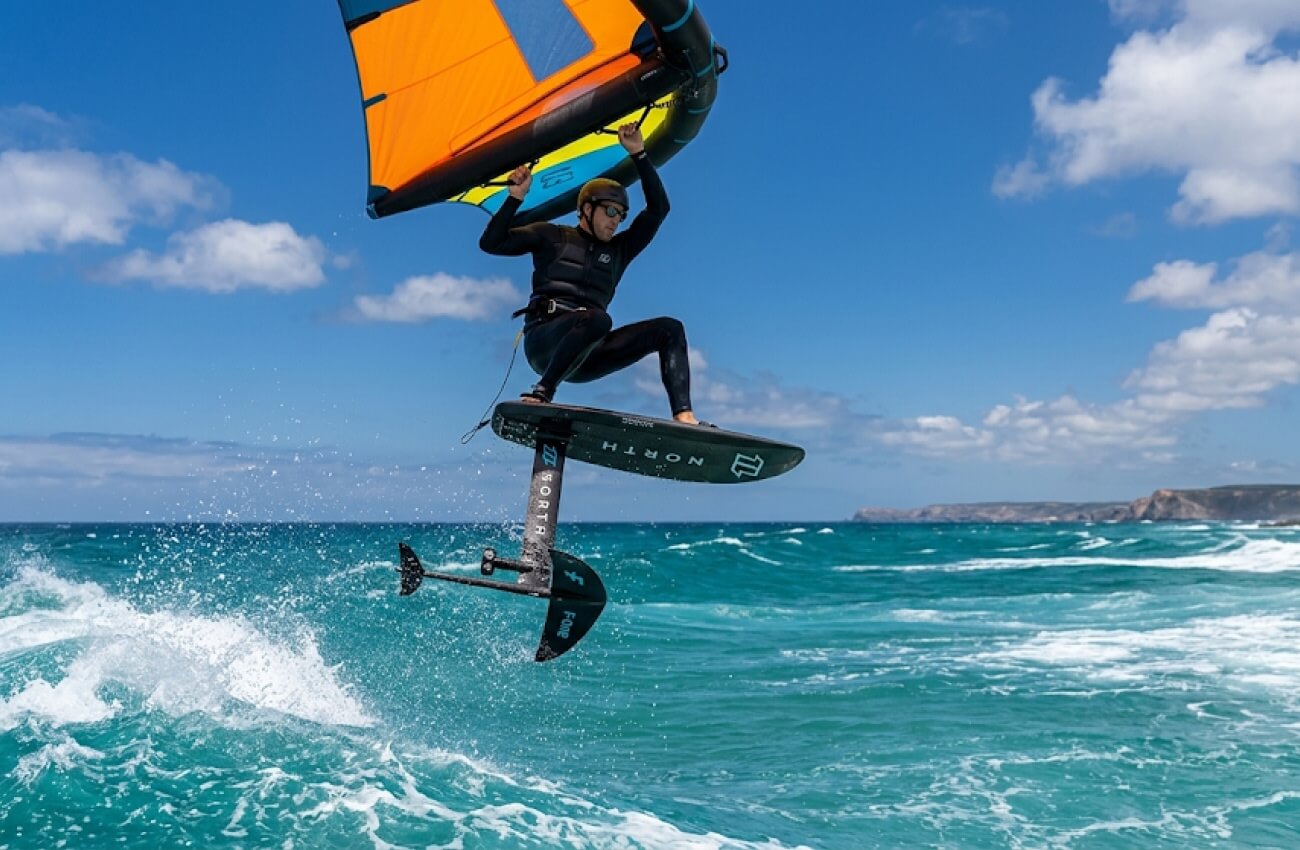
Most people plan a wind sport trip around flights and accommodation. The calendar comes last, almost as an afterthought. That’s backwards. On an island like Koh Phangan, the single variable that determines whether you get five solid sessions or five frustrating days on the beach is timing. Get the season right and the wind does the work. Get it wrong and even the best conditions on the island won’t save you.
Phangan has two main riding windows — the northeast monsoon from November through April, and a summer season running July to September — plus two transitional stretches in between where the wind gets unreliable. Kitesurfing and wing foil on Phangan respond differently to each of these phases. A kite needs consistent pressure to fly and generate power; a wing foil can work in conditions too light for kiteboarding to function. That distinction matters when you’re planning which sport to learn and when to show up.
The northeast monsoon builds through November and settles into a reliable pattern by December. Wind runs 10 to 20 knots most days, coming in from the northeast with the kind of consistency that makes structured learning possible. Sessions stack up. You don’t lose a day waiting.
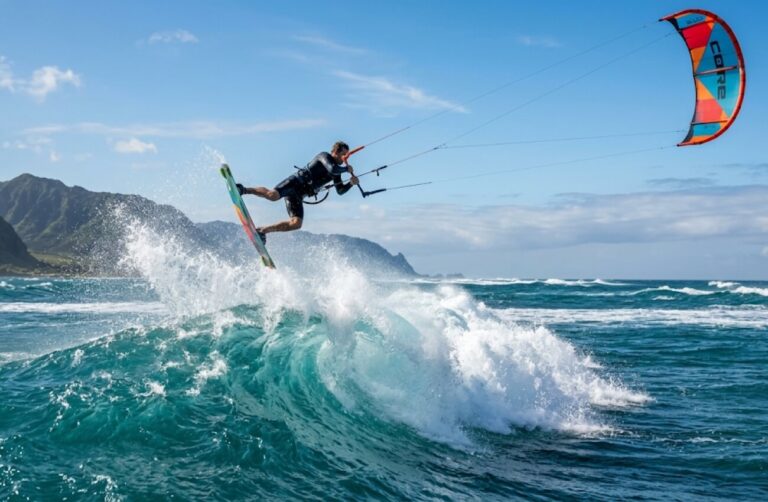
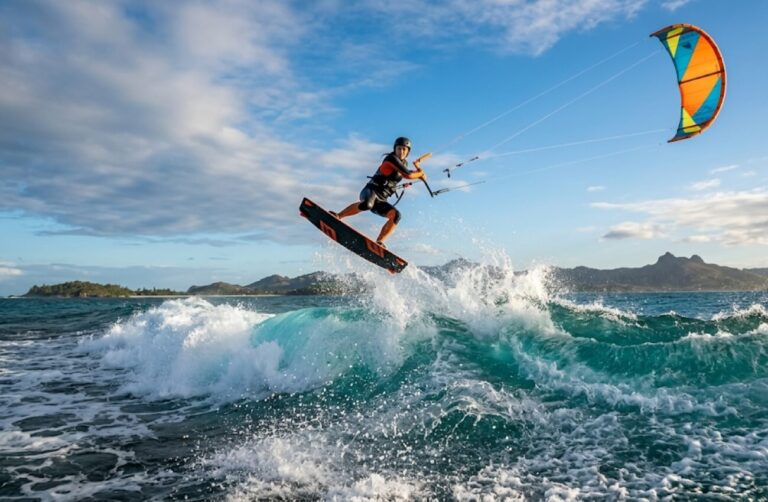
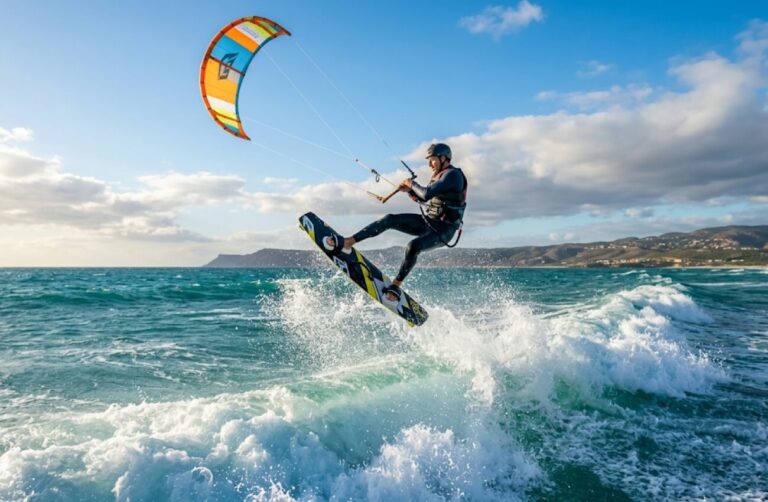
Kite surfing on Koh Phangan at this time of year means consistent daily wind, dry weather and warm water temperatures that sit comfortably above 28°C. For newcomers, this combination is about as good as conditions get anywhere in the Gulf of Thailand. At Thong Sala Beach the water is shallow and the fetch is open, which means the wind develops cleanly without the gusts and lulls you get near headlands or in narrow bays. Most students in the Beginner course — 6 hours over 3 days — get their first real board rides by the second or third session specifically because the wind is stable enough to let them focus on technique rather than fight the conditions.
Wing foiling shares the same high season window. The northeast monsoon delivers the type of steady, moderate wind that suits foil learning particularly well — strong enough to generate lift, not so powerful that staying balanced on the board becomes a battle. The 2-hour introductory lesson at 4,000 THB is structured around wing handling and early board work; doing that in 15 knots of clean NE wind is a fundamentally different experience from trying it in a gusty, shifting breeze.
One pattern we see every season: riders who arrive in January or February with 5 days and a plan tend to leave with an IKO or IWO certification and the immediate question of when they’re coming back. The wind is that consistent.
The southwest monsoon brings a different character. Wind tends to run stronger — often 15 to 25 knots in peak gusts — and comes from the opposite direction. The island’s geography means some spots that work well in winter become sheltered and slow, while open-sea zones on the southwest-facing side come into their own.
For intermediate and advanced riders this is a productive window. More power in the kite means faster rides, bigger pop, more margin to work on jumps and carves. Wing foilers who have their foil time sorted can push into higher-speed territory with the same gear. The learning curve flattens, but the ceiling lifts.
Beginners can still get on the water in July through September — calmer mornings often provide manageable conditions before the afternoon wind builds. The approach shifts slightly: sessions tend to start earlier, gear selection becomes more conservative, and instructors at Kite Club work with smaller kites and lower-volume foil setups to keep the experience controlled. It’s workable, just not as forgiving as the NE season.
These are the transition periods, and there’s no point dressing them up. Wind in May and June drops off as the NE monsoon exhausts itself. October through early November sits in a similar dead zone before the new season establishes. Days can be glassy, or they can deliver 10 minutes of usable wind followed by nothing.
Kite sessions are genuinely difficult to plan in these windows. You need reliable pressure in the lines to learn — a kite that collapses and relaunches every 20 minutes doesn’t teach anyone anything useful.
On lighter wind days, wing foil on Phangan is still possible where a kite won’t fly — the foil generates lift at speeds a kite board can’t reach in the same conditions. So if your dates fall in May or October and you have some flexibility in sport choice, wing foiling gives you more rideable days than kiteboarding would.
For the windless stretches, Kite Club runs efoil sessions, kayaking, and SUP rental from the same beach. None of those require wind, and efoiling in particular fills the gap well for people who came for the foiling sensation specifically.
January–April — North-East monsoon at full strength. Best conditions of the year for both kitesurfing and wing foiling. Ideal for first-timers. Book in advance; this is high season.
May–June — Transition. Wind present on some days, absent on others. Selective sessions possible; wing foiling more viable than kite on lighter days.
July–September — South-West monsoon. Stronger and more powerful. Best for intermediate and experienced riders. Beginners can learn with the right guidance, especially in early morning windows.
October–November — Low wind, occasional rain. Plan for non-wind activities. Not recommended as a primary kite or wing trip window.
December — North-East wind building again. Shoulder season pricing, fewer people on the water, conditions improving week by week through the month.
For kitesurfing: a Discovery session is 2 hours and gives you a genuine feel for kite control. The Beginner course runs 3 days. The Independent course — which takes you to riding upwind independently — is 5 days. Budget at least 3 days in the water if you want to leave with a real skill, not just a memory.
Wing foiling tracks similarly: a single 2-hour lesson, a 3-day Beginner course, and a 5-day Advanced course that builds to confident, independent riding. The foil demands more from your balance early on, so an extra buffer day is never wasted.
Whatever your timeline, arriving in high season — December through April — is the most reliable way to make the days count. Kite Club on Koh Phangan sits directly on Thong Sala Beach; the commute from beach towel to first lesson is about two minutes.
To discover the best conditions, you should target the northeast wind window from December through April. This monsoon season provides the most consistent wind and steady wind patterns on the island. It is the ideal conditions for a spot for learning, as the wind direction stays predictable, making it perfect for beginners who want to learn wing foiling or take their first kitesurfing lesson.
The southwest monsoon season typically brings a stronger, more good wind, which is great for wing foilers seeking more power or advanced riders looking to catch the wind. While these seasons in thailand are more active, our local school still finds calm waters in sheltered lagoons, ensuring a high-quality foiling experience even when the breeze picks up.
Yes, the tide is a key factor for any island in Thailand. At Thong Sala and Chaloklum, high tide provides the necessary depth for the hydrofoil, while low tide creates the flat water conditions that are perfect for learning kite control. Our school provides lessons that are timed specifically with the water levels to ensure you have the best wing foiling environment possible.
Absolutely. Koh Phangan offers more than just high-wind activities. On light wind days, wing foiling is often still possible because the foil generates lift much more efficiently than a traditional kite board. If the wind drops below usable levels, our school offers lessons in eFoiling or SUP, making it a versatile spot for learning regardless of the daily wind conditions.