How long does it take to learn kitesurfing or wing foiling in Koh Phangan? Honest timelines for beginners
08.04.2026
Read
Kitesurfing Koh Phangan attracts beginners wondering which wind sport to tackle first. The decision matters because your initial choice shapes your learning timeline, equipment investment, and progression path. Both sports use wind power, but the experience differs dramatically.
Understanding the practical differences helps you choose based on your goals rather than marketing hype. Here’s what actually separates these two sports on the island.
Kiting demands patience during initial training. You’ll spend considerable time mastering kite control before touching a board – learning launching, landing, steering through the wind window. Body dragging comes next, teaching you how to move through water using just the kite. Only after these foundations do you attempt board work.
Wing foiling typically feels more intuitive early on. You hold the wing directly in your hands, which provides instant feedback compared to managing lines stretched 20 meters away. The challenge shifts to balance – that moment when the foil lifts you above the water requires finding a precise sweet spot.
Thing is, both sports reward consistent practice. Gaps between training sessions reset muscle memory and slow your progression noticeably.
The sport requires moderate to strong wind for beginner gear to generate enough power. Thailand’s high season from January through April delivers these conditions reliably. Peak months see steady patterns with excellent rideable day percentages. Outside this window, conditions become unpredictable.
Wing foil Phangan works in lighter conditions that would leave kites grounded. Once you’ve learned basic technique, you can ride in wind where kiters sit watching from the beach. This broader range extends your season significantly beyond traditional kiting months.
Wind direction affects both sports differently at Thong Sala and Chaloklum beaches. Southeast patterns favor both locations, but wingfoil handles slight direction shifts more forgivingly than kites requiring specific angles for safe riding.
Kiting gear fills a large bag. You’ll carry multiple kite sizes for variable conditions, board, harness, pump, safety equipment. Setup takes time and proper technique. The complexity means you can’t just grab gear and go – there’s a ritual to it.
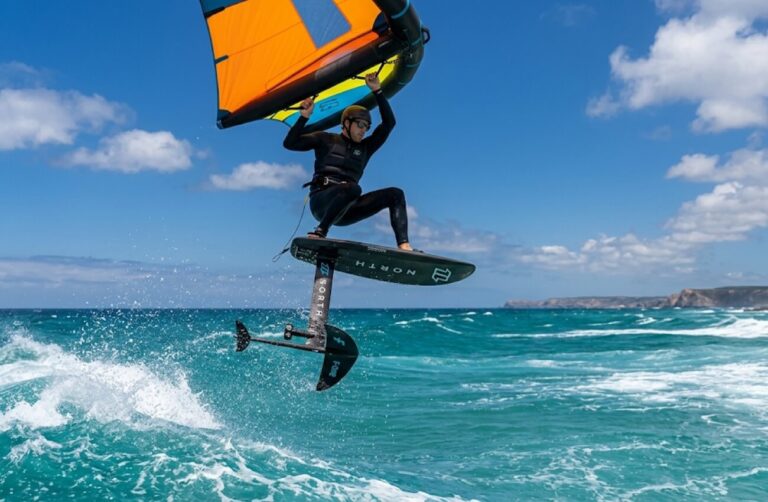
Wing foil equipment packs into a backpack. One wing, the foil assembly, and a compact board covers most conditions. The setup is quick – pump the wing, attach the foil, you’re ready. This convenience matters for travelers managing limited luggage space.
Kite Club maintains both gear types with daily inspections. Equipment rental includes everything needed, eliminating the purchase decision until you’ve determined which sport suits you long-term.
Once hooked into your harness, the kite’s pull transfers to your core rather than arms. Sessions can run longer without excessive fatigue. The challenge comes from maintaining body position and board control while managing power through the bar.
Your arms hold the wing continuously. This creates noticeable fatigue initially, at least before your muscles adapt. Sessions typically run shorter at first until conditioning improves. The foil itself demands constant balance awareness – you’re always making micro-adjustments.
Safety profiles differ significantly. Kite lines create entanglement risks if you lose control. The power can overwhelm beginners in gusts. Wingfoil’s main hazard comes from the foil’s sharp edges and rigid mast. Falling near your board requires constant awareness to avoid cuts.
The Kiteschool Koh Phangan addresses both sports risks through structured progression. Instructors with years of experience stay close during early sessions, using radio communication for kiting and physical proximity for wingfoil.
Choose kiting if you want higher speeds, bigger jumps, and the thrill of powered riding. The sport rewards patience during the learning curve with dramatic progression once fundamentals click. Advanced riders execute unhooked tricks and big air that wingfoil can’t match.
Pick wingfoil if light wind days frustrate you, if you value compact gear, or if the “flying” sensation appeals more than speed. Progression feels steadier without the dramatic breakthroughs and plateaus common in kite learning. The sport suits riders who enjoy balance-intensive activities.
Many students at our facility eventually learn both. Kiting fills strong wind days with high-energy sessions. Wingfoil unlocks conditions where kites sit unused on the beach. The skills complement each other – kite control improves your wing handling, and foil balance translates back to kiteboarding performance.
Both sports work well here. Shallow water at both beaches provides safe learning environments. Flatwater conditions during peak season eliminate wave variables that complicate progression elsewhere in Thailand. The decision comes down to personal preference rather than one being objectively superior.
Most students focus on one sport during their initial trip to build solid fundamentals. Learning both simultaneously splits your practice time and slows progression in each sport considerably.
Both sports carry inherent risks when practiced improperly. Wingfoiling poses foil collision hazards, while kiting involves line entanglement and power management challenges. Proper instruction with professional coaching minimizes risks in both activities.
Wing foiling demands more arm endurance initially since you hold the wing continuously. Kiting transfers power through a harness, relying more on core strength and leg stability for board control.
Both sports work excellently during the peak season when steady winds blow consistently. Wing foiling extends your season by working in lighter conditions that often occur outside peak months.