How long does it take to learn kitesurfing or wing foiling in Koh Phangan? Honest timelines for beginners
08.04.2026
Read
Most people arrive on Koh Phangan with one identity already assigned to the island. Either it’s the Full Moon Party place, or it’s the yoga retreat destination. Both reputations are accurate. What doesn’t make it into the usual travel writeup is that the same island — with its steady Gulf of Thailand breeze, shallow flat water along the west coast, and genuinely relaxed atmosphere — also happens to be one of the more practical spots in southern Thailand for active holidays combining water sports with a wellness-first schedule.
The traveller this article is written for isn’t hard to picture. Morning practice at a shala or on a rooftop deck, lunch somewhere quiet, then an afternoon on the water learning something physical and absorbing enough to fully clear the head. That rhythm is not a compromise between two types of trip. On Phangan, it’s a natural fit.
There’s a version of a Thai beach destination that means crowded longtail lanes, jet ski tours running parallel to the shore, and no space to learn anything without boats cutting across your line. Thong Sala Beach — where Kite Club operates — is not that. The water off the beach is shallow, the area is open, and boat traffic through the riding zone is minimal. That matters more than it sounds: when you’re in the first few hours of learning to kite or foil, having calm water and unobstructed space to make mistakes is directly connected to how quickly you progress.
The backdrop also contributes to the experience in a concrete way. Jungle-covered hills behind the beach, clear water that reflects the afternoon light in a way that makes it difficult to be stressed. These aren’t decorative details — they’re part of why the atmosphere at the water’s edge on Phangan is closer to a retreat centre than a watersports theme park.
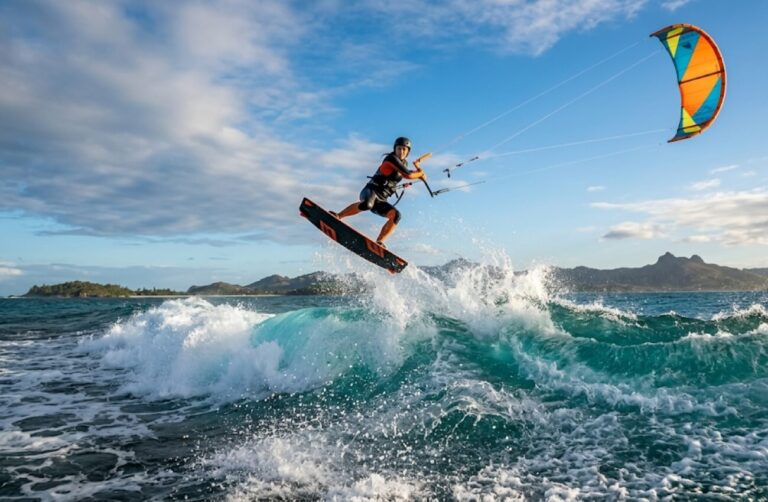
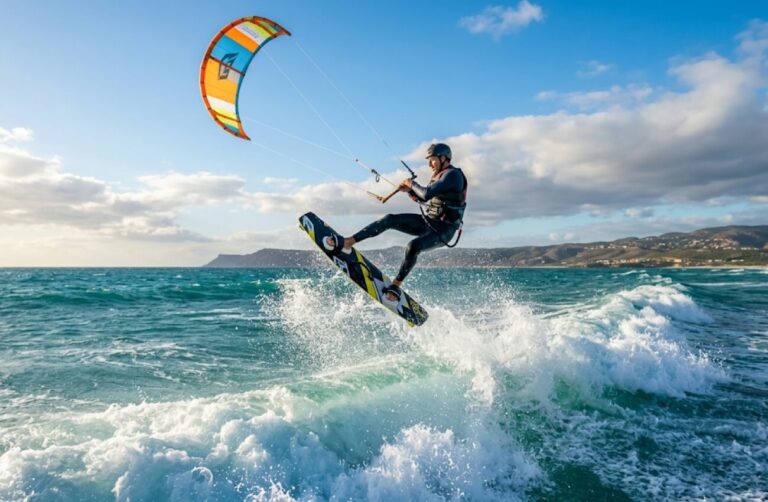
Kiteboarding on Koh Phangan delivers a full-body workout in a way that’s difficult to replicate in a gym context. Core engagement, shoulder and arm endurance, continuous balance adjustments through the legs — and all of it happening outdoors, in moving water, with sensory input that a studio environment simply can’t replicate. Studies on outdoor physical activity consistently show faster cortisol reduction than equivalent indoor exercise, and that pattern matches what we observe on the beach. Students who arrive visibly stressed on day one tend to look fundamentally different by day three.
The yoga overlap is genuine and practical. The hip stability and core activation that underpin a solid Warrior sequence translate directly into kite board control. Breath awareness — the foundation of any serious practice — becomes functional during the learning curve of wind sports, where panic breathing is the main obstacle to reading the kite clearly. Several students who come through with a yoga background each season progress faster than average, and they usually notice the connection themselves without being told.
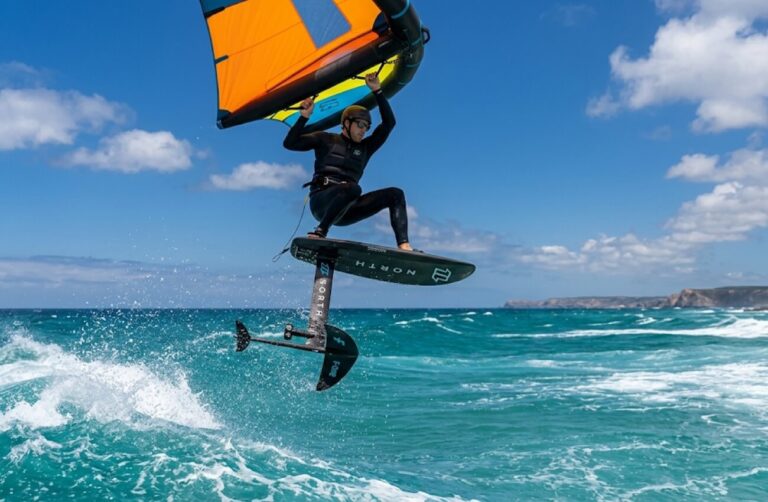
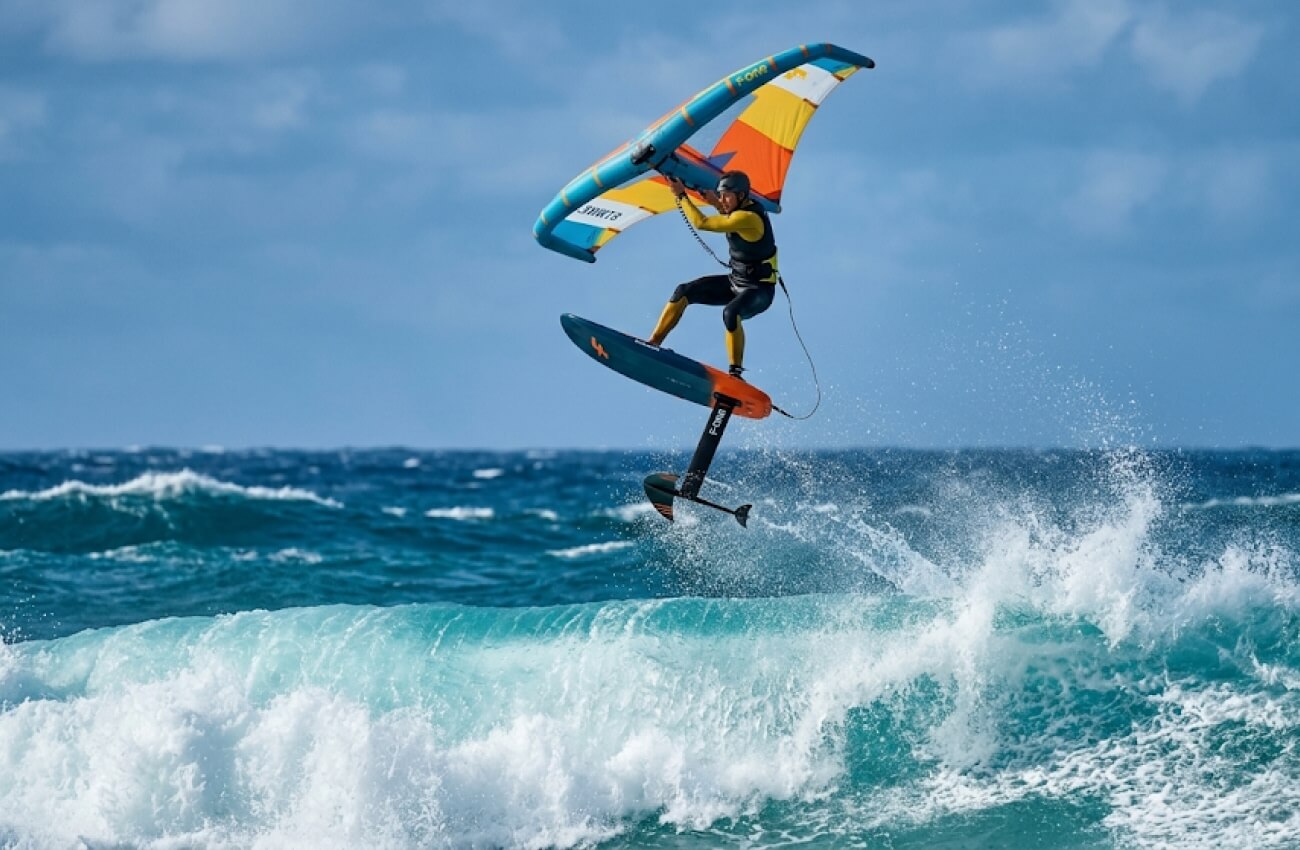
Wing foiling adds another dimension. The sport builds core strength, balance, and coordination through a different movement pattern than kitesurfing — slower, more postural, more focused on subtle weight transfers. One afternoon trying wing foil after a morning of yoga is a surprisingly coherent physical combination. The body is already switched on; the foil work gives it something demanding to do.
This isn’t a fixed programme — more a rough template based on what tends to work well when people combine both disciplines in a single trip.
Days 1 and 2: morning practice, then a Discovery kite lesson in the afternoon. The Discovery session runs 2 hours at 3,500 THB and covers beach kite handling, body dragging and first board contact. It’s designed as an entry point, not a full course — enough to understand whether kiteboarding is the direction you want to go, without committing five days upfront.
Day 3: try the wing foil on Koh Phangan. A single 2-hour lesson (4,000 THB) focuses on wing handling and early board balance, without the foil at first. After a couple of days of kite work, the proprioceptive awareness you’ve built carries over in ways that are genuinely useful.
Days 4 and 5: continue whichever sport clicked, or split the time across both. Rental gear is available for independent sessions once you have the basics. Between sessions, Kite Club has showers, Wi-Fi and a lounge area at the beach — practical details that matter when you’re structuring a full day around morning practice and afternoon water time.
One thing that both yoga retreats and wind sports schools have in common is that they produce fast friendships. Shared physical challenge, outdoor environment, and a slightly slowed-down daily rhythm create social conditions that most urban settings don’t. At the beach club, the same dynamic operates. The team speaks English, Russian, Arabic, German and Ukrainian — an international group of instructors working with an equally international group of students, which means the social atmosphere on the sand tends to reflect the wellness-travel crowd rather than a standard watersports camp.
The foiling community on Phangan in particular has grown noticeably over the last few seasons. People who come for a 3-day beginner course and connect with other wing foilers often extend their stay without planning to.
The high season from November through April is the most reliable window for combining a wellness retreat with wind sport training. The northeast monsoon delivers consistent 12 to 18 knot wind during those months, which means you can plan your water sessions without building in weather days. Gear, instructor time, and IKO or IWO certification are all included in course prices — you bring a swimsuit, sunscreen, and whatever you carry to a yoga class.
Koh Phangan offers a rare combination of world-class yoga and high-energy wind sports. It is one of the best places in Thailand where you can start your day with meditation and end it by conquering the waves. The island is a true paradise for those seeking an unforgettable lifestyle shift, blending the mindfulness of a retreat with the physical challenge of the sea.
The coastline around Thong Sala and Chaloklum is famous for its white sand and sandy, shallow lagoons. Unlike spots with sharp coral or dangerous coral reefs close to the shore, our learning zones are safe and forgiving. This picturesque environment allows you to focus on your kite or wing without worrying about what’s underwater, making it the perfect setting for top schools to operate.
The best time is during the dry season, specifically from December through April. This period provides the most reliable wind to sail a wing or kite, along with clear skies and calm morning waters for yoga. Arriving during the dry season ensures you get the most out of the best activities the island has to offer.
Absolutely. If the wind takes a break, you can grab a stand-up paddleboard (SUP) to explore the hidden coves, hike to a jungle waterfall, or go snorkelling to see the vibrant coral life. The island’s diversity ensures that your active holiday stays on track, offering plenty of ways to stay moving even on the calmest days.