How long does it take to learn kitesurfing or wing foiling in Koh Phangan? Honest timelines for beginners
08.04.2026
Read
Experienced kiters are adding wing foil Koh Phangan to their rotation at increasing rates. Not replacing their kites – supplementing them. The two sports work in different wind ranges, demand distinct physical skills, and create unique sensations that complement rather than compete with each other.
Understanding what drives this shift reveals why winging appeals even to riders with years of experience in the harness.
Kitesurfing Koh Phangan needs 12-20 knots minimum for most riders. Below that, you’re sitting on the beach watching forecasts obsessively. These marginal days (8-12 knots) happen frequently, especially mornings during Thailand’s northeast monsoon season from November through April.
Winging works perfectly in exactly this range. Your kite sits in the bag. The wing comes out. Suddenly you’re riding conditions that would’ve been a wasted day before.
High season brings consistent wind, but even then you get light days. One kitesurfer recently told me he added 20+ sessions to his season just by bringing a wing setup. Those mornings with flat water and a light breeze became prime foiling time instead of frustrating downtime.
This extended coverage matters especially for people traveling specifically for wind sports. Weather doesn’t always cooperate perfectly with vacation schedules. Having both options maximizes your water time regardless of what conditions appear.
Kiting requires line checks, safety system verification, kite inflation, bar setup, and careful launch preparation. Even experienced riders need 15-20 minutes. You’re constantly managing lines, checking for wear, and maintaining complex safety systems.
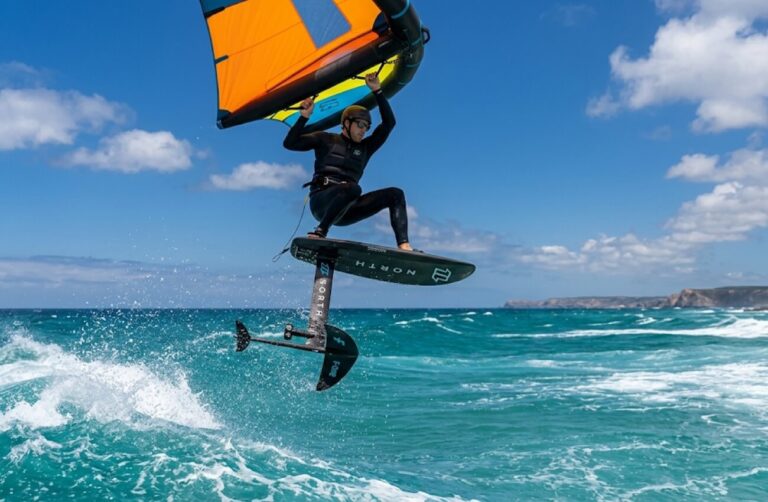
Wing foil equipment involves pumping up one inflatable wing and connecting a foil to a board. A maximum of five minutes. No lines to tangle. No safety systems beyond basic leash protocols. The simplicity feels liberating after years of kite gear management.
Compact wing gear fits in a backpack easily. I’ve watched kiters traveling with massive board bags switch to winging purely for the logistical advantage. On-site accommodation doesn’t need dedicated equipment storage. Scooter transport becomes possible. Beach walks carrying equipment turn manageable.
This portability matters more as you get older or travel more frequently. The lightweight nature of wing foil rental and personal gear reduces physical strain that accumulated over years of hauling kite equipment.
Kiting develops specific muscle groups – core, legs, and harness-supported upper body. After years, you’ve adapted completely. Progress slows. The sport still delivers thrills but lacks a fresh physical challenge.
Winging engages arms, shoulders, and grip strength continuously. Your body works completely differently. Experienced kiters often struggle initially because their developed strengths don’t transfer directly. This creates genuine learning progression again rather than minor refinements of existing skills.
One rider with 10 years of experience found winging humbling. Back to basics. Falls. Fatigue. But that’s exactly what reignited his passion – a fresh challenge requiring dedicated practice rather than coasting on existing ability.
Kiting delivers high-speed thrills, big air, and powerful carving. That aggressive riding style creates specific sensations – adrenaline, intensity, and physical engagement with force.
Foiling feels like true flight. Silent. Smooth. Effortless once you’re up. The sensation is meditative rather than aggressive. You’re reading subtle wind shifts and making micro-adjustments to stay airborne. It’s a completely different headspace.
Wind reading ability transfers completely. Years of kiting teach you to feel gusts, recognize buildups, and predict condition changes. This environmental awareness cuts the wing-foiling learning curve significantly compared to complete beginners.
Thong Sala beach kitesurfing profi already understand water conditions, safety protocols, and right-of-way rules. They’re comfortable in deeper water and confident managing equipment issues. These foundational skills let them focus purely on wing-specific techniques.
Most kiters achieve their first sustained foil flight within two to three days due to their strong wind-reading skills. However, developing comfortable independent riding typically requires four to six days, since hand control and balance techniques differ significantly from kiting.
No, the boards serve different purposes. Kiteboards lack proper foil mounting systems and have the wrong volume distribution for foiling. Wing foiling requires boards specifically designed with reinforced foil boxes and appropriate buoyancy for the sport.
Yes, professional instruction helps tremendously. While your wind knowledge accelerates learning, wing-specific techniques however require proper coaching to avoid reinforcing bad habits. Instructors familiar with transitioning kiters can address the unique challenges your background creates.
Both sports carry risks. Wing foiling eliminates line-related hazards but introduces foil-specific dangers like sharp underwater edges. Experienced water sports athletes typically adapt to these risks quickly; nevertheless, proper safety protocols and protective gear remain essential regardless of your kiting background.