How long does it take to learn kitesurfing or wing foiling in Koh Phangan? Honest timelines for beginners
08.04.2026
Read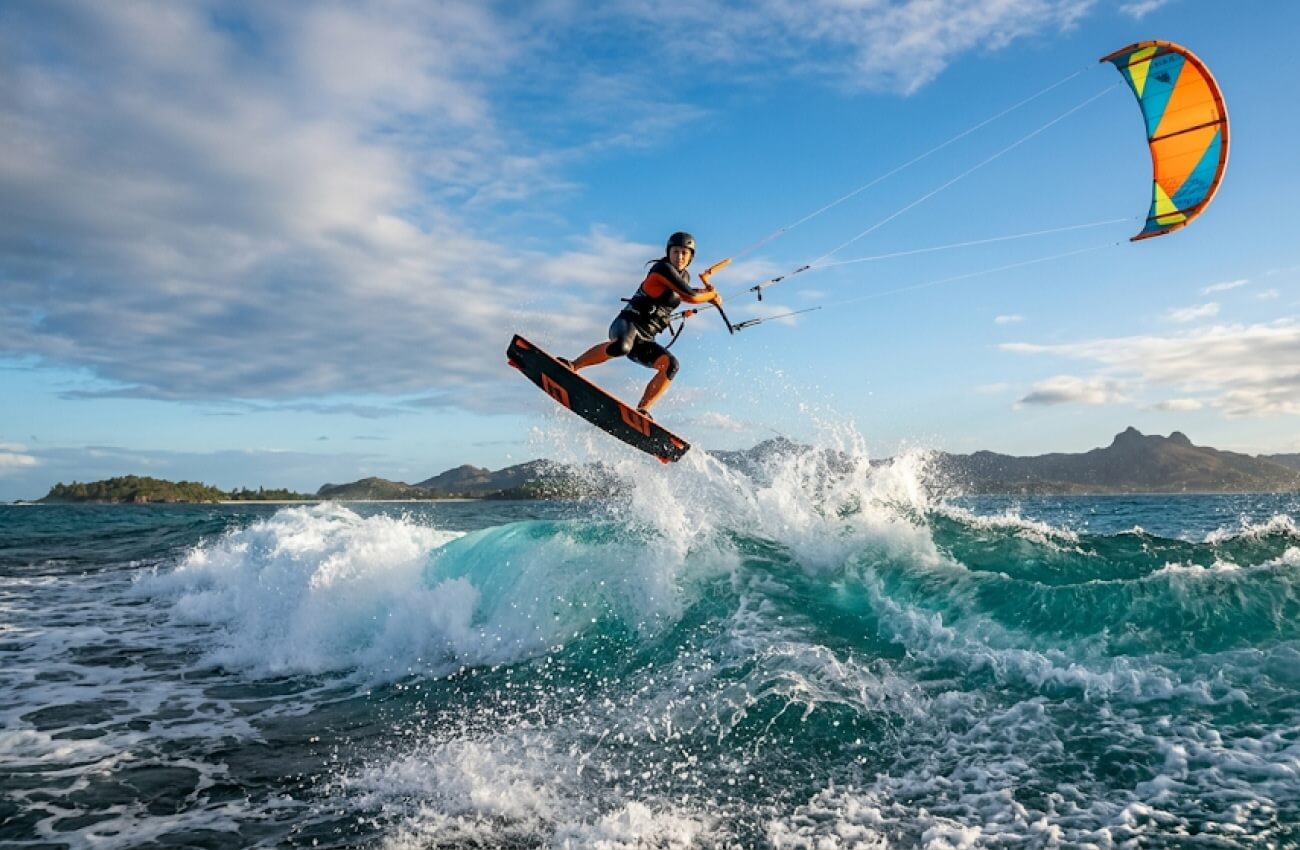
You’ve got five days on the island. Both sports look incredible from the beach — one person slicing across the water with a massive kite overhead, another one gliding in near silence just above the surface on what looks like nothing at all. You want to try something. But which one?
This question lands in our inbox almost every week, and honestly, there’s no single right answer. What we can do is give you a proper breakdown — gear, feel, learning curve, conditions — so you leave this page with a clear idea of where to start. Trying wing foil on Koh Phangan style has become just as popular as signing up for a kite course, and both sports have genuine first-timer appeal. The warm, shallow water around Thong Sala Beach and the steady Gulf of Thailand wind make this one of the more forgiving places in Southeast Asia to take either step.
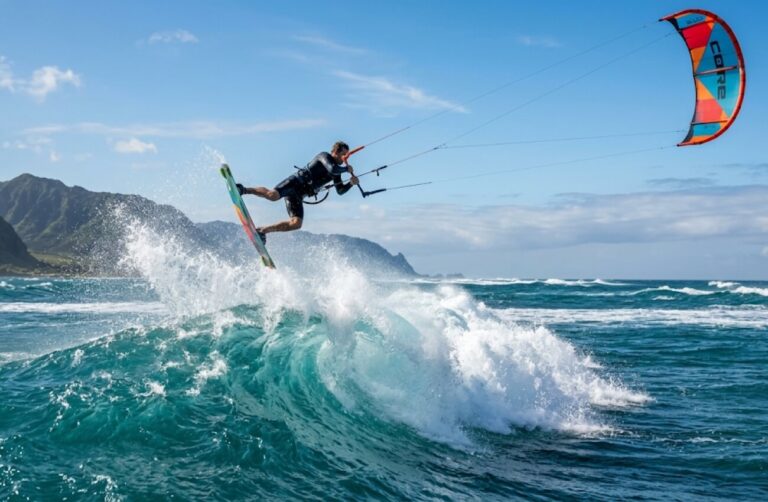
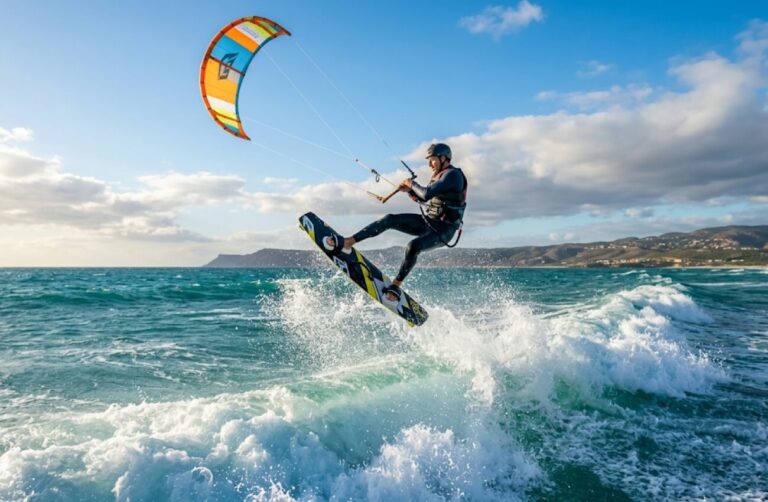
Kitesurfing puts a large kite in the sky — connected to you through a bar and lines, held in place by a harness around your waist. The kite does the pulling; you direct it like a slow-moving aerial vehicle while the board tracks underneath you. It’s a power sport. When the kite is flying well and the wind is on, you feel it in your whole body.
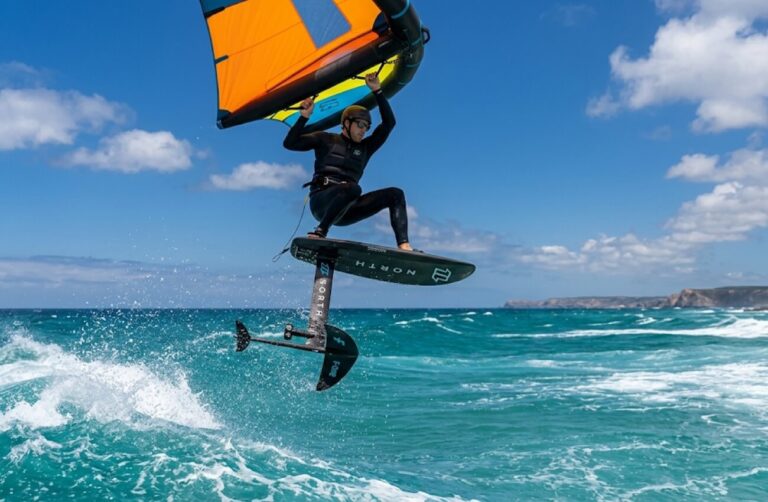
Wing foiling works on an entirely different principle. You hold a compact inflatable wing in both hands — no harness, no lines — and stand on a board fitted with a hydrofoil underneath. As you pick up speed, the foil lifts the board clear of the water. You’re gliding on air, 50 to 80 centimetres above the surface, with almost no spray and very little noise. The wing page describes it well: it blends surfing, wind sports, and the sensation of slipping above the water into something that doesn’t quite resemble anything else.
The physical difference matters from day one. Kite requires you to learn a two-handed bar system and understand how the kite moves through the wind window — there’s a spatial logic to it that takes a few sessions to internalise. Wing foiling asks less of your arms initially but demands more from your legs and core, because keeping a foil board stable underfoot is genuinely challenging until your body figures it out.
Neither sport hands you a first ride in the first hour. That’s worth saying upfront, because unrealistic expectations are one of the main reasons people feel frustrated on day two.
With kitesurfing, the standard path here runs: a 2-hour Discovery session (3,500 THB) to get a feel for kite control on the beach and in the water, then a Beginner course of 6 hours over 3 days (11,000 THB) where you work toward your first board rides, and finally the Independent course — 10 hours over 5 days (18,000 THB) — which takes you to the point where you can ride independently at any spot. Most students get their first real board rides somewhere in the middle of the Beginner course. By the end of Independent, the majority are riding upwind and starting to feel truly free on the water.
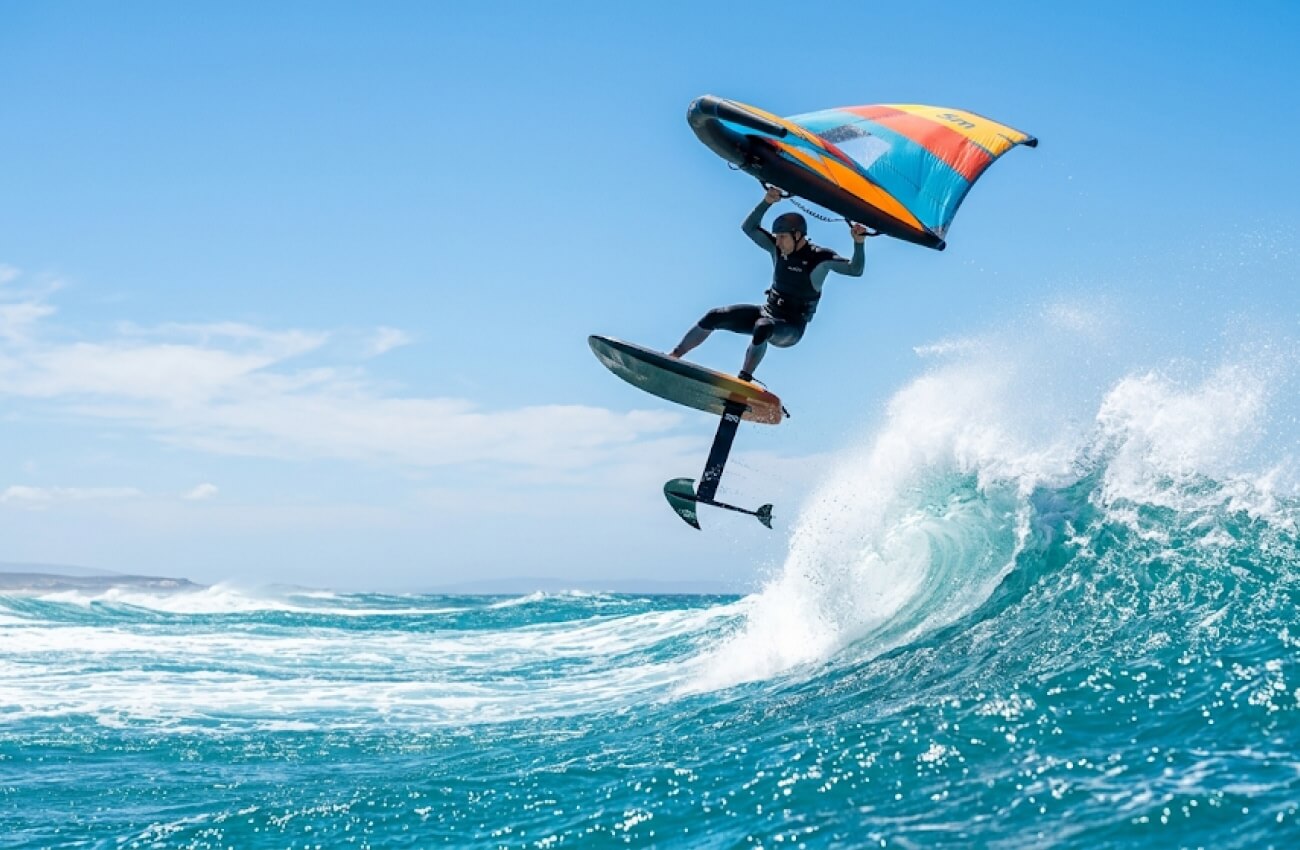
Wing foiling has a different shape. The first 2-hour lesson (4,000 THB) focuses on wing handling and board balance without the foil — and that’s deliberate, not a shortcut. The Beginner course (6 hours / 3 days, 11,900 THB) brings in the foil gradually. Getting the board to lift consistently is the hard part, and it’s mostly a balance problem your nervous system has to solve. The Advanced course (10 hours / 5 days, 16,900 THB) is where foiling starts to feel effortless and you begin riding confidently in both directions.
One thing we see every season: people who come in with strong balance — surfers, snowboarders, paddleboarders — tend to crack wing foiling faster than average. People with good spatial awareness and calm, methodical learning styles often take to kitesurfing very quickly. Neither pattern is universal, but it’s a useful data point.
High season runs December through April, driven by the northeast monsoon. Wind tends to come in at 12–18 knots — consistent, not gusty, with long rideable windows. This is the best time to learn either sport. Thong Sala Beach is shallow and flat, with no reef in the learning zone and almost no boat traffic during sessions.
Learning kitesurfing on Koh Phangan during this window is about as good as it gets anywhere in the Gulf of Thailand. The wind is strong enough to generate real power in the kite but steady enough that you’re not fighting sudden gusts. The waist-deep water in the practice zone means falls are low-stakes, and there’s space to make mistakes without pressure.
The same conditions work for wing foiling, though with one extra advantage: the foil performs well in lighter wind, down to around 10 knots. That means even on softer days during shoulder season — July through September, when southwest wind come through — wing sessions are still very much on. Kitesurfing in those conditions requires more wind than the southwest usually delivers consistently, so experienced kite riders tend to wait for stronger windows.
Some people know immediately. They want height, speed, big carves, the eventual possibility of jumping. That’s kitesurfing. The progression from first ride to freestyle feels natural if that’s the direction you’re heading, and five days on Phangan can take you a long way into the Beginner-to-Independent arc.
Others are drawn to something quieter. Wing foiling is more meditative in feel, at least in the early stages. You’re not fighting a power kite; you’re reading the wind through your hands and responding. Some people find that more satisfying than adrenaline. Some want both.
If you genuinely can’t decide, the honest answer is: try a 2-hour session. Kite Club on Koh Phangan holds both IKO and IWO certifications — one of the only schools on the island that does — so you don’t need to split your time between different clubs or travel to different beaches. Abdo, the IWO-certified instructor, teaches wing sessions; Sergei, Abdulla, and Roman cover kite. The team speaks English, Russian, Arabic, German and Ukrainian, so communication is rarely an issue regardless of where you’re from.
Bring a swimsuit, sunscreen, and a towel. Everything else — board, kite or wing, harness or helmet — is included in the course price.
Drop a message and tell them which direction you’re leaning, or ask for a recommendation based on your background. Either way, the water here is warm, the wind is real, and there’s no bad choice.
Neither sport is inherently “easier,” but they challenge you differently. Kitesurfing in Thailand focuses on managing the power of a kite in the sky, which requires spatial awareness. Wing foiling, on the other hand, is a water sport that demands more core balance as you learn to glide above the surface. If you’ve done board sports before, you might find a wing foil lesson more intuitive, but both are perfect for beginners in the shallow, calm waters on Koh Phangan.
The island is famous for its steady wind direction and consistent winds in Thailand. During the high season, the northeast monsoon delivers reliable pressure that isn’t too gusty. Combined with the flat water lagoon at Thong Sala, it creates a safe environment where you can stand up at any time. This predictability is why wing foil schools and kiteboarding instructors can guarantee such steady progress for their students.
This is where the two sports differ. A kitesurf setup usually needs a bit more pressure to stay in the air and pull a rider. However, wingfoil technology is incredibly efficient; a hydrofoil can generate lift even in light wind conditions where a kite might struggle. This makes winging a favorite for water sports enthusiasts who want to maximize their time on the water, regardless of minor weather shifts.
The wing foil community on Koh Phangan is growing fast but remains very welcoming. Unlike more crowded spots, the scene here is built on shared excitement for the thrill of flight. Whether you are looking for lessons and rentals or advice from experienced riders, you’ll find that the foiling community at Kite Club is “relaxed but not lazy,” making it easy to transition from a student to a regular part of the local scene.